College isn’t cheap. Tuition fees, rent, books, laptops, exam fees, and daily expenses add up fast. Most students don’t have a full-time job, so paying for everything becomes stressful.
A personal loan can help, but there’s a catch. Banks usually want proof that you can repay the money. If you don’t have a job, getting approved is harder. It isn’t impossible though.
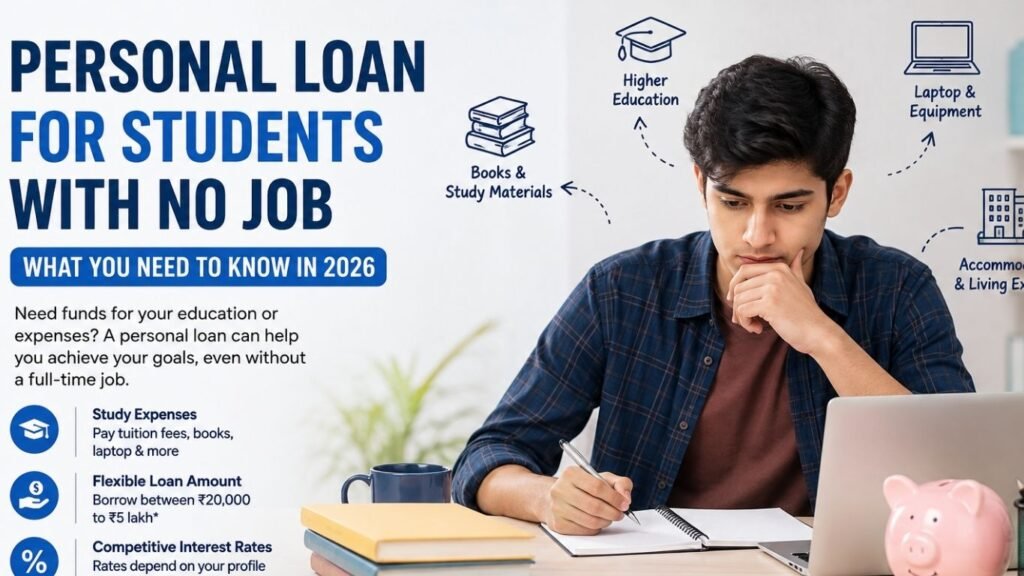
Can a student without a job get a personal loan?
Yes, but approval depends on more than your student status.
Most lenders look at:
- Your age
- Your college or university
- Your academic background
- Your credit history (if you have one)
- Whether someone can act as a co-applicant or guarantor
- Your family’s income
If your parents or guardian have a stable income, your chances usually improve.
Who can apply?
You may qualify if you are:
- A college or university student
- At least 18 years old (requirements vary by lender)
- An Indian citizen
- Able to provide valid identity and address proof
- Applying with a co-applicant when required
Some NBFCs and fintech lenders also consider students who earn through freelancing, internships, or part-time work.
Documents you may need
Keep these documents ready before applying:
- Aadhaar Card
- PAN Card
- College ID card
- Admission letter
- Address proof
- Passport-size photographs
- Bank statements
- Income proof of your co-applicant, if required
Different lenders may ask for extra documents.
How much loan can you get?
The loan amount depends on the lender and your financial profile.
Many lenders provide anywhere between ₹20,000 and ₹5 lakh. Some may approve more if your co-applicant has a strong income and good credit history.
Interest rates
Personal loans usually have higher interest rates than education loans.
The final rate depends on factors like:
- Credit score
- Repayment history
- Loan amount
- Loan tenure
- Income of the co-applicant
Compare multiple lenders before accepting an offer.
Best alternatives to a personal loan
A personal loan isn’t always the cheapest option.
You can also consider:
- Education loans from banks
- Government student loan schemes
- Scholarships
- College financial aid
- Interest-free loans from family members
These options often cost less over the long term.
Tips to improve your approval chances
A few small steps can make a difference.
- Apply with a parent as co-applicant.
- Borrow only what you actually need.
- Check your credit report for mistakes.
- Avoid applying with several lenders on the same day.
- Choose a repayment period you can realistically manage.
Things to check before signing
Read the loan agreement carefully.
Pay attention to:
- Processing fees
- Prepayment charges
- Late payment penalties
- EMI amount
- Total repayment amount
A lower EMI can look attractive, but a longer tenure often means paying more interest overall.
Frequently asked questions
Can I get a personal loan without any income?
Some lenders may approve your application if you have a co-applicant with a stable income or another source of repayment.
Is a student loan better than a personal loan?
For education expenses, an education loan is usually cheaper because interest rates are often lower and repayment terms are more student-friendly.
Do I need a credit score?
Not always. If you don’t have a credit history, lenders may focus more on your co-applicant’s financial profile.
Final thoughts
A personal loan can help cover urgent expenses when you’re a student without a job. Just make sure you understand the total cost before borrowing. Compare lenders, read the fine print, and borrow only the amount you truly need. Your future income should help you move forward, not spend years paying for a loan that was bigger than necessary.